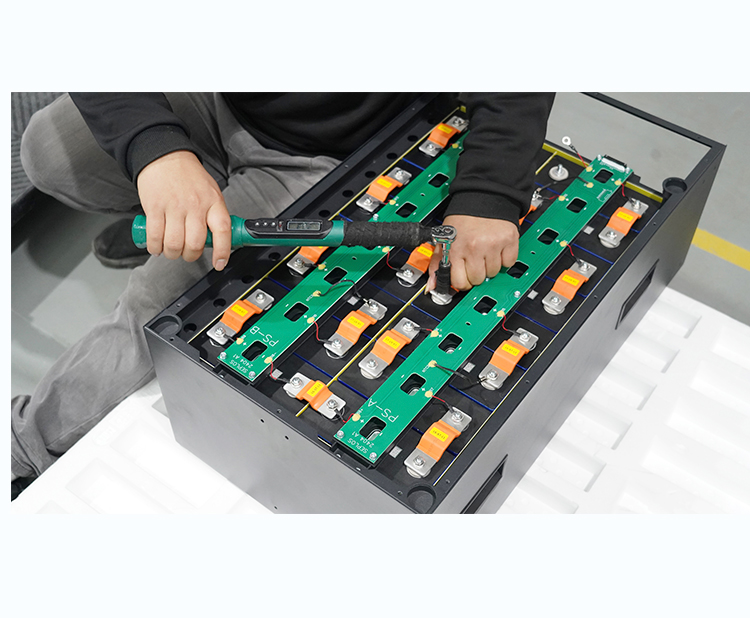
When you look at the specifications of a lithium‑ion energy‑storage battery, you will often see a rating like IP65. It sounds impressive, but many buyers misunderstand what it can — and cannot — do. In this article, we break down the real meaning of IP65 and how it should guide your installation decision.
What the two digits stand for
An IP (Ingress Protection) rating has two numbers:
- First digit (6): Protection against solids. A rating of 6 means the unit is fully dust‑tight. No dust can enter the enclosure, which matters for both indoor garages and semi‑outdoor environments.
- Second digit (5): Protection against water. A rating of 5 means the unit resists water jets and splashes from any direction. Light rain, accidental splashes, and humid air will not damage the enclosure.
What IP65 does NOT mean
This is the part many buyers get wrong.
IP65 is not the same as waterproof or submersible. It does not mean:
- You can submerge the battery in water.
- You can leave it exposed to heavy, continuous rain without any shelter.
- You can mount it outdoors with no roof, no eave, and no canopy.
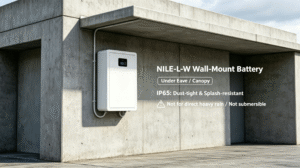
An IP65 enclosure keeps out splashes and dust, but it is still designed for sheltered installation.
Where an IP65 battery should be installed
Based on our installation manual, an IP65 wall‑mount battery is suitable for:
- Indoors (garage, utility room, storage room)
- Outdoors under shelter — such as under an eave, a porch, or a rain canopy
It must not be:
- Submerged in water
- Exposed directly to unprotected heavy rain
- Placed where water can pool around the unit
IP20 vs IP65: a quick comparison
Most indoor energy‑storage batteries on the market carry an IP20 rating. That means they prevent contact with fingers or tools, but offer no meaningful water protection. IP20 units are strictly for indoor, dry environments.
| Rating | Dust protection | Water protection | Typical use |
|---|---|---|---|
| IP20 | Limited | None | Indoor, dry rooms only |
| IP65 | Fully dust‑tight | Splash‑proof from all directions | Indoors or sheltered outdoor |
Why this matters for your project
Misreading an IP rating is one of the most common reasons for after‑sales disputes. A customer who assumes “IP65 = outdoor‑ready” and then mounts the unit on an exposed wall in a rainy climate may end up with water damage that is not covered under warranty.
Before you place an order, ask yourself:
- Where exactly will the battery be mounted? Indoors? Under an eave? On an open wall?
- Does the site have reliable shelter from heavy rain?
- Is the wall made of concrete or another non‑flammable material?
If you are unsure, send us your installation photos or a site description. We will help you confirm whether your chosen model fits the environment.
Need the right battery for your installation site?
At Rimdin Energy, we offer both indoor IP20 models and sheltered‑outdoor IP65 wall‑mount, rack‑mount, and floor‑standing energy‑storage batteries. If you tell us your location, application, and inverter model, our engineering team can recommend the most suitable configuration.
Feel free to send us an inquiry or leave a message on this page. We will reply with the datasheet and installation guidance.