Energy storage systems are used in many different scenarios — from homes and RVs to factories and commercial buildings. No matter what your application is, choosing the right system starts with understanding your actual needs.
This guide covers the key factors for residential, mobile, and commercial energy storage selection.
1. Define Your Application Scenario First
Different scenarios require different system designs.

| Scenario | Main Purpose | What Matters Most |
| Residential / home | Backup power, solar self-consumption, lower bills | Capacity, safety, ease of installation, noise |
| RV / mobile / off-grid | Power on the road or in remote areas | Portability, size, vibration resistance, DC output |
| Commercial & industrial | Peak shaving, backup power, cost reduction | Capacity, power, cycle life, safety |
| Solar + storage | Increase self-consumption | Compatibility with PV inverter, EMS |
| Microgrid / off-grid | Stable power in weak-grid areas | Reliability, expandability, service support |
2. Capacity and Power: Match Them to Your Load
For home users:
- A small home may need 5–10 kWh for basic backup.
- A larger home with air conditioning, pumps, or EV charging may need 10–20 kWh or more.
- List your essential loads first: lights, refrigerator, Wi-Fi router, security system, water pump, air conditioner.
For RV and mobile users:
- Consider how many days you need off-grid power.
- Common loads include lighting, refrigerator, water pump, fan, inverter, and entertainment devices.
- Space, weight, and vibration resistance are as important as capacity.
- If your RV uses 12 V or 24 V DC devices, a system with DC output can improve efficiency
For commercial and industrial users:
- If you need longer backup time, pay more attention to capacity.
- If you need fast response or high-load support, pay more attention to power.
- Both capacity and power should match your daily load curve.
3. Cycle Life Determines Long-Term Value
For home and RV systems, cycle life affects how many years the battery can serve you. For commercial systems, it directly affects return on investment.
For most lithium iron phosphate systems, cycle life is commonly evaluated at around 6,000 cycles or more, depending on test conditions. Real-world performance is affected by:
- Depth of discharge
- Operating temperature
- Charge and discharge rate
- Battery management strategy
- System integration quality
RV and off-grid systems often experience deeper daily discharge, so choosing a battery with sufficient cycle life and a reliable BMS is especially important.
4. Check Efficiency and Usable Capacity
Round-trip efficiency shows how much energy can be retrieved after charging. Higher efficiency means less energy loss and lower operating cost.
You should also confirm usable capacity. Some systems reserve part of the capacity to protect the battery. For example, a 10 kWh home battery with 90% usable capacity can deliver about 9 kWh per cycle.
5. Safety, Certification, and Installation Environment
For home systems:
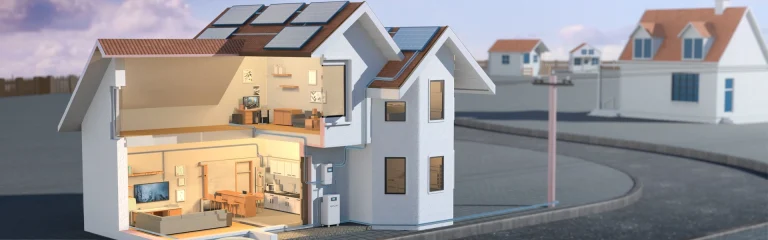
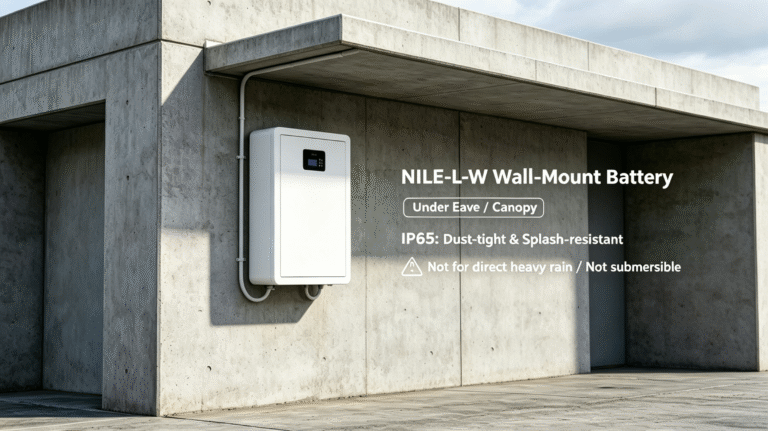
- Consider installation location: garage, utility room, outdoor wall, or balcony.
- Check noise level, ventilation, and local electrical regulations.
- Look for relevant safety certifications such as CE, IEC, UL, or UN 38.3, depending on your market.
For RV and mobile systems:
- The system must handle vibration, temperature changes, and limited space.
- Compact design and secure mounting are important.
- Make sure the system supports the voltage and communication interfaces your vehicle requires.
For commercial systems:
- Fire protection, electrical safety, and compliance documentation are essential.
- A reliable supplier should provide technical documentation, test reports, and clear installation guidance.
6. Match the System to Local Conditions
The same energy storage system may perform differently in different regions.
- In Europe and North America, home solar + storage and backup power are common needs.
- In Southeast Asia, Africa, and island regions, off-grid and weak-grid reliability is often more important.
- For RV users, temperature range, charging options, and road conditions should all be considered.
Before selection, consider:
- Local temperature range
- Grid stability or off-grid requirements
- Installation environment
- Maintenance resources
- After-sales support availability
7. Choose a Supplier Who Can Support Different Scenarios
Whether you need a home energy storage system, an RV battery solution, or a commercial energy storage project, supplier capability matters.
A strong supplier should provide:
- Clear product specifications for each scenario
- Flexible system configuration
- Professional technical communication
- Complete documentation and certification support
- Consistent product quality
- Reliable after-sales support
Final Thoughts
Choosing the right energy storage system is not about finding the largest capacity or the lowest price. It is about matching capacity, power, cycle life, safety, and application scenario with your actual needs — whether at home, on the road, or in a commercial project.
If you are evaluating energy storage solutions for residential, RV, commercial, industrial, solar, or off-grid applications, our team can help you review your requirements and recommend a suitable configuration.