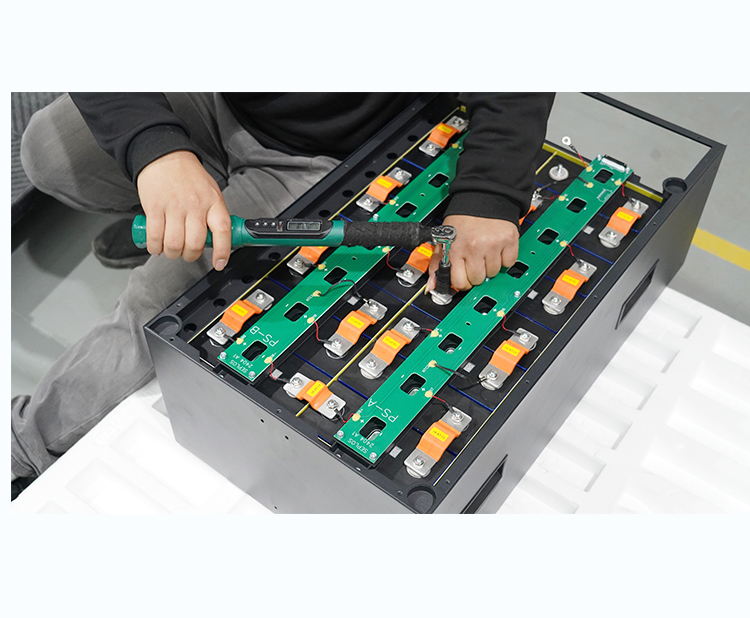
Data centers are growing faster than many power grids can support. AI workloads, hyperscale expansion, and rising renewable energy targets are all pushing electricity demand higher. In many regions, the bottleneck is no longer only equipment or space. It is grid capacity.
Battery energy storage systems (BESS) help solve this problem by smoothing demand peaks, improving grid interconnection, and making data center power use more flexible.
Why peak loads are becoming a bigger challenge
Data center loads are not always flat. AI training, GPU cluster scheduling, and high-density racks can create rapid changes in power demand. Some loads can swing sharply within milliseconds, which puts pressure on transformers, switchgear, and upstream grid infrastructure.
At the same time, electricity pricing in many markets penalizes peak demand. Even if a data center operates efficiently most of the time, a short peak can increase demand charges and raise overall operating costs.
How battery storage manages peak loads
Battery storage reduces peak loads in several practical ways.
| Function | How it works |
| Peak shaving | The battery discharges during high-demand periods to reduce the power drawn from the grid. |
| Load shifting | Energy is stored during off-peak or low-price periods and used when demand or prices rise. |
| Demand charge reduction | By lowering the highest recorded demand, storage can reduce electricity costs. |
| Fast power response | Batteries can respond in milliseconds, helping absorb sudden load changes from IT equipment. |
| Backup support | Storage can complement UPS systems and reduce reliance on diesel generators. |
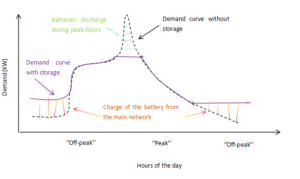
This allows a data center to present a smoother, more predictable load profile to the grid.
Easing grid connection constraints
Grid interconnection queues have become a major challenge for new data center projects. In some markets, waiting times for grid upgrades can delay construction by years.
A behind-the-meter battery system can help by:
●Reducing the maximum import capacity required from the grid.
●Absorbing short-term load spikes during commissioning or workload changes.
●Supporting voltage and frequency stability in weak grid areas.
●Enabling faster approval where utilities see storage as a grid-friendly solution.
For developers, this is often a financial decision. The cost of a battery system may be much lower than the revenue lost from a delayed data center opening.
Supporting renewable energy and sustainability goals
Many data center operators have committed to renewable energy, carbon reduction, or RE100-aligned targets. Battery storage helps make those goals more achievable.
It can store solar or wind power when generation is high and release it when renewable output falls. This improves self-consumption, reduces curtailment, and helps maintain stable operations even when renewable generation is variable.
What to consider when designing a solution
Not every data center needs the same storage configuration. Important design factors include:
●Peak demand profile: How often do peaks occur, and how high are they?
●Backup requirements: What runtime is needed for critical loads?
●Interconnection limits: What is the maximum allowable grid import?
●Renewable integration: Will solar, wind, or PPAs be part of the energy mix?
●Safety and compliance: Does the system meet local fire, electrical, and grid codes?
●Scalability: Can the system expand as compute capacity grows?
Battery storage is no longer just a backup asset for data centers. It is becoming a practical tool for managing peak loads, accelerating grid connection, lowering electricity costs, and supporting long-term sustainability.
If you are evaluating battery storage for a data center or high-density compute project, contact our team to discuss system sizing, integration options, and certification requirements.